
The Southern Interior community of Grand Forks has completed a major rebuild and relaunch of its original tourism strategy, shifting the community from being a quick stopping point on Highway 3 to a tourism destination. With support from the Economic Trust of the Southern Interior (ETSI-BC), the strategy served to develop new tourism assets attracting more visitors and generating increased revenue for local businesses.

Okanagan Study Explores Opportunities for Solar-Powered Communities
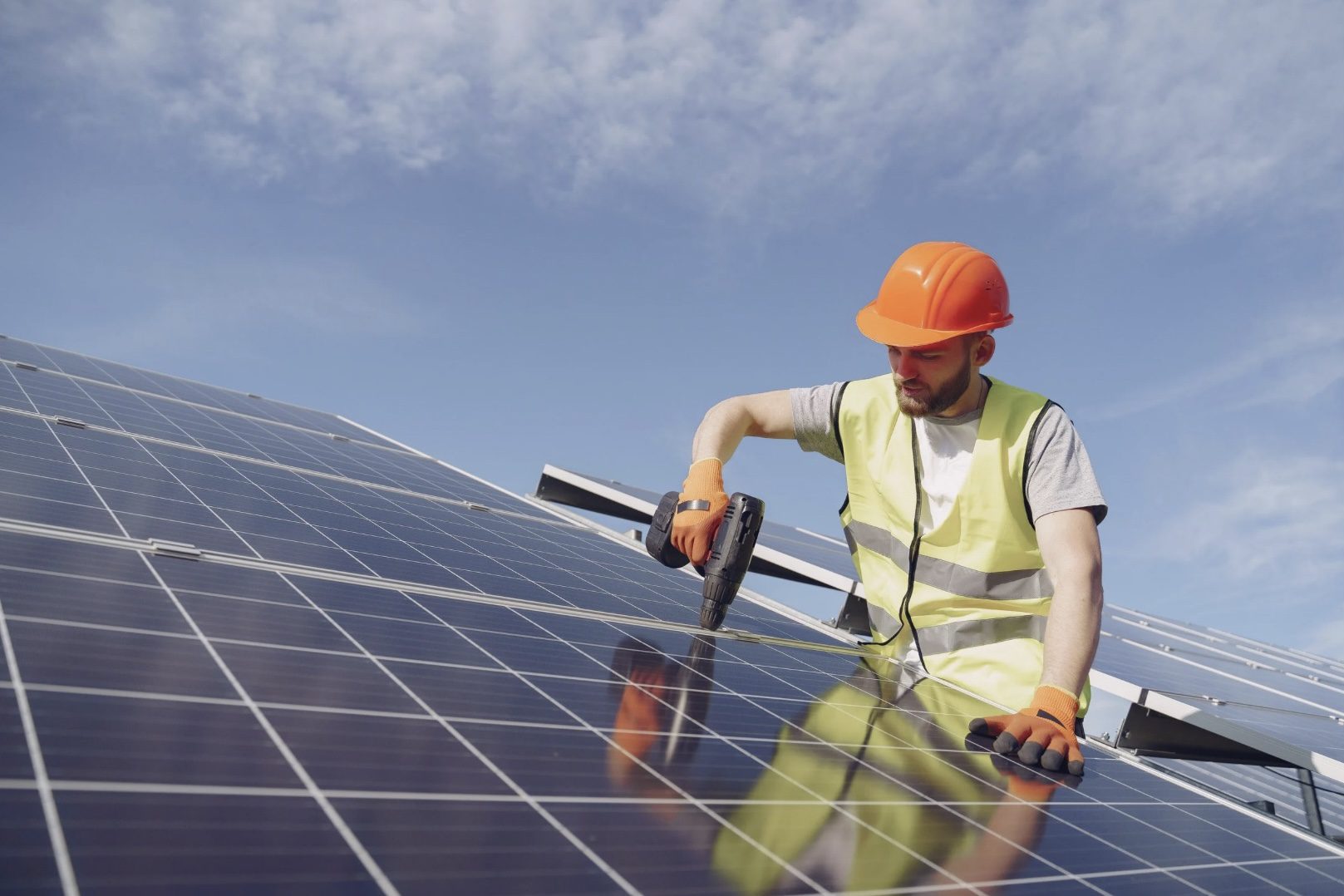
As the urgency to address climate change fuels a transition to renewable energy, a feasibility study led by the Okanagan Circular Society (OCS) is building the case for renewable energy adoption through an innovative community enterprise model.
The OCS was established in 2020 as an initiative of CoLab, a co-working community hub in Kelowna. The OCS Community Solar Initiative addresses the growing challenge of increasing energy costs in BC, particularly affecting non-profits, municipal governments, and low-income households. While solar energy promises reduced utility bills and less reliance on non-renewable energy, its upfront costs make it inaccessible to marginalized communities and community-focussed organizations.
Successful community solar projects exist in BC and around the world, but many are limited in scale due to their cooperative legal structure. The OCS Community Solar Initiative project integrates the proven large-scale solar power development model into an OCS community ownership framework.
Support for the Community Solar Initiative was provided by the Economic Trust of the Southern Interior (ETSI-BC) through its Innovating & Advancing Key Sectors funding stream. “Not only does this locally driven project facilitate the transition to renewable energy, but it also provides a community economic development model that can be used by other communities in the Southern Interior and beyond,” says Laurel Douglas, CEO of ETSI-BC.
Shane Lapp, CEO of OCS, worked on the Community Solar Initiative from the side of his desk for two years before the ETSI-BC funding enabled the research to ramp up. With more than 20 years experience in systems engineering and multiple business startups, Lapp partnered with consultant Barri Harris, to undertake the feasibility work. “We would never have been able go as far as we did without the ETSI-BC funding,” says Lapp.
Importance of Regional Collaboration
As part of the study, diverse stakeholders came together to delve into the challenges and trade-offs that renewable energy stakeholders face today and looked at solutions specific to the Okanagan. Key stakeholders included Extropic Energy, a local engineering firm, and Aurora Renewable, a 51% Indigenous owned renewable energy company. Three promising scenarios for a potential Community Solar Initiative business model were explored: the Central Okanagan (Kelowna) Food Bank; multi-unit residential buildings in Penticton, and Penticton-distributed solar farms.
The research showed that the Penticton scenarios offered the great potential as a community solar model because they are within a municipality-owned utility. This provides more flexibility than larger utilities such as BC Hydro and Fortis.
The study also determined that while challenges exist for community solar in BC due mainly to the province’s regulatory framework, there is significant potential for community solar as electricity costs rise and regulations evolve. The Okanagan Valley has a high solar potential of 1,200 to 1,400 kWh/kWp annually which is above the national average. Data suggests that the greatest reduction in greenhouse gas emissions (GHG) exists through use of electric vehicles, as well as the transition from natural gas heating to heat pumps. Community solar can support this transition.
In terms of technology readiness, Smart metering is crucial for sophisticated billing and energy management systems, especially for Virtual Net Metering (VNM), a bill-crediting system for community solar. When community solar projects create power that is not used on site, it’s fed back into the grid, generating net metering credits that are shared among subscribers.
An Innovation First for the Okanagan
As a robust operating model, the OCS Community Enterprise framework integrates the best aspects of cooperatives, innovative community funding models and municipal partnerships for community solar implementation. Through the collaborative work on this initiative, the team has secured additional grant funding to develop community solar with the Penticton Electrical Utility. The grant will enable regulatory advancement by piloting VNM, modernizing utility billing systems, and implementing innovative business models for community solar. “This positions Penticton and the Okanagan at the forefront of renewable energy policy development,” says Lapp.
“While regulatory change takes time, the OCS Community Solar Initiative is opening people’s minds to different ways of doing business and paving the way for a more inclusive, sustainable and prosperous future for all,” says Lapp.
More News & Stories
Sicamous Tourism Strategy Builds a Path for Sustainable Growth
From houseboating to sledding, hiking, biking, and birding, Sicamous is the tourism hub of the Shuswap region. While summer visitors fill Sicamous with activity, off-season visitations drop sharply, prompting the community to pursue a more diversified and sustainable year-round tourism future. The Economic Trust of the Southern Interior (ETSI-BC) supported the District of Sicamous Development Corporation in revitalizing the community’s tourism sector with a dynamic, five-year tourism strategy to 2030.
Forestry Strategy Positions ?aq’am First Nation for New Opportunities
Increased timber harvest allocations for BC’s First Nations are opening the door to new business opportunities for enterprising First Nations communities such as ?aq’am in the East Kootenays. With funding support from the Economic Trust of the Southern Interior (ETSI-BC), ?aq’am developed a forestry business scan, a strategy to build capacity for projects made possible by the expanded forest tenure. The scan is guiding ?aq’am to increase its role in forestry as it pursues a resilient and sustainable future.
ETSI-BC Welcomes Krista Mallory as Regional Project and Strategic Initiatives Manager
July 29, 2026 – The Economic Trust of the Southern Interior (ETSI-BC)) is pleased to announce that Krista Mallory will be joining the organization as its new Regional Project and Strategic Initiatives Manager effective October 1, 2026.
Wayfinding in Barriere for Economic Resilience and Growth
When a major fire destroyed the Tolko sawmill in the North Thompson region near Barriere in 2003, residents and stakeholders rallied to rebuild and redefine the community’s economic future. As the community has evolved, so have the systems that help residents and visitors navigate in and around Barriere, including a multi-phase Wayfinding Strategy launched in 2024. The project, supported by the Economic Trust of the Southern Interior (ETSI-BC) is aimed at boosting visitor traffic and attracting more business investment, ensuring a strong and resilient future.
Five-Year Plan Strengthens ?aq’am Community Enterprises
?aq’am Community Enterprises (ACE) is the economic development arm of the ?aq’am First Nation, the largest member of Ktunaxa Nation. Known for its progressive business development goals, ACE undertook a comprehensive review of its strategic priorities. The result is a dynamic new five-year strategic plan that will guide more efficient, tactical, and resilient delivery of ACE’s programs and services. The project was supported by the Economic Trust of the Southern Interior (ETSI-BC).
Thompson-Okanagan Launches New Economic Development Practitioners Network
After a year of work connecting economic development practitioners across the Thompson-Okanagan, the region’s first Economic Development Practitioners Network (EDPN) is now in place. Modelled after the Kootenay Boundary EDPN created in 2014, the Thompson Okanagan EDPN includes community and municipal and First Nations economic development practitioners, Chambers of Commerce, Community Futures and other stakeholders. The group came together for the first time on April 8, 2026, where they learned, shared ideas and information, and further planned future activities. The Economic Trust of the Southern Interior (ETSI-BC) is committed to supporting both the Kootenay Boundary and Thompson-Okanagan networks of economic development practitioners.
2027-30 Strategic Planning and DAAP 4.39 Updates
June 25, 2026 – The Economic Trust of the Southern Interior (ETSI-BC) is grateful for the input from partners, funding recipients, committee members and other regional stakeholders who have taken the time to help inform our next three-year Strategic Plan for 2027-30. We are also pleased to provide an update on the status of the DAAP 4.39 action item.
ETSI-BC Fall 2026 Funding Intake: Up to $1M Available for Projects
June 18, 2026 – The Economic Trust of the Southern Interior (ETSI-BC) is pleased to announce that its next Funding Intake will launch on Tuesday, September 1, 2026 and close on Thursday, October 1, 2026.
ETSI-BC Spring Funding Intake Invests Over $1 Million to Strengthen the Southern Interior Economy
June 8, 2026 – Communities across British Columbia’s Southern Interior are set to benefit from a new round of investment through the Economic Trust of the Southern Interior. On June 5, 2026, ETSI-BC approved $1,011,000 in funding for 33 projects, representing a combined project value of $3 million. The funded initiatives will help communities diversify their local economies, support innovation, and respond to regional opportunities